Comprehensive Hearing Assessment
Hearing Healthcare Begins with a Comprehensive Hearing Assessment
Better hearing health is impossible unless you know what challenges lie ahead. The first essential step on the path to better hearing begins with a comprehensive hearing assessment.
The comprehensive hearing assessment provided by The Hearing Center of MCC starts off with a personal, professional consultation.
A Clear Picture of Your Hearing Health
Many people do not realize how much their hearing affects daily activities until changes begin to appear in conversations, work settings or social situations. A comprehensive hearing assessment helps identify these changes and provides a clear picture of how well you hear different sounds and speech.
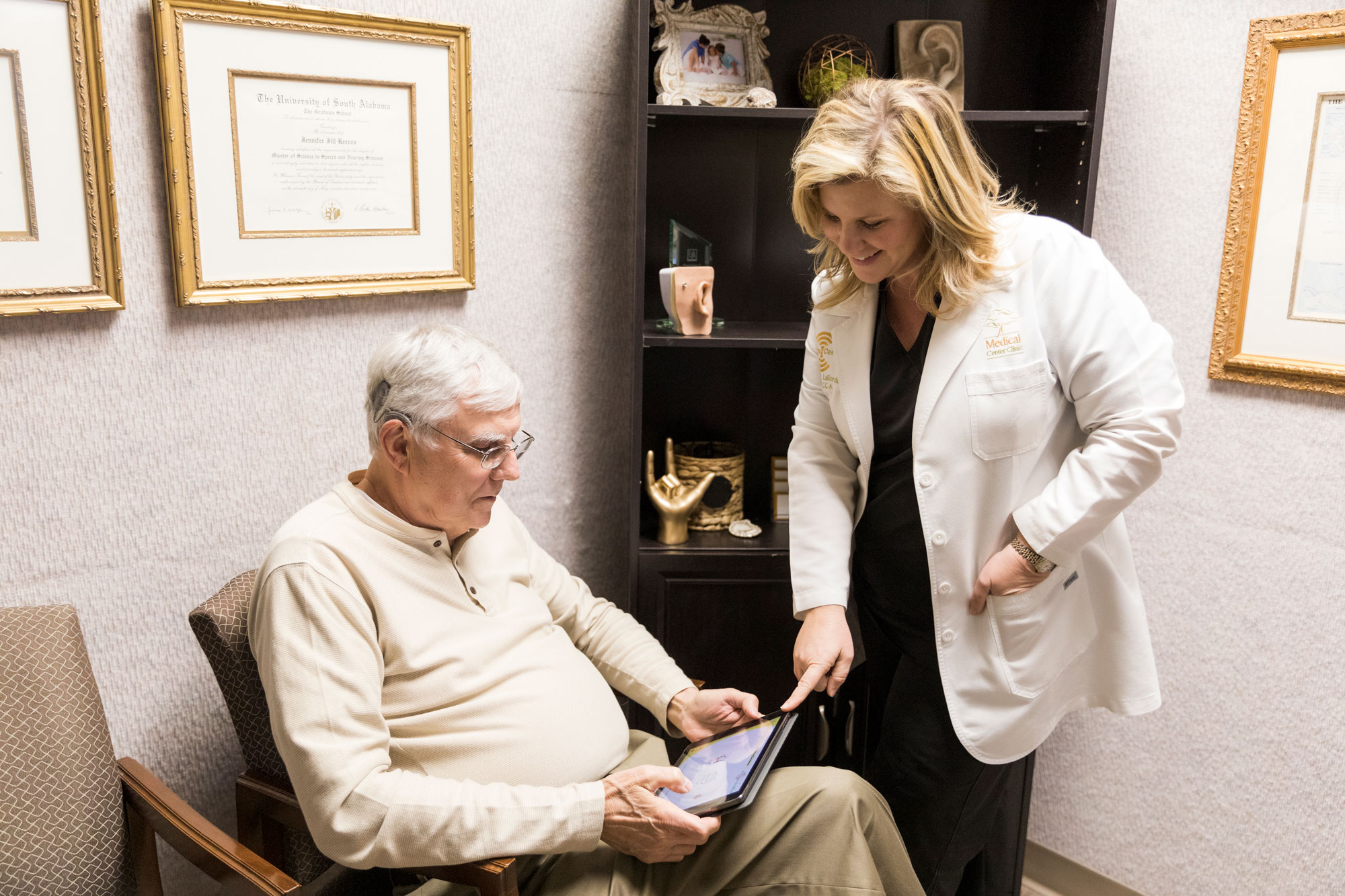
An audiologist reviews the results with you and explains what they mean for your listening needs. At The Hearing Center, we use these evaluations to guide the next steps in care, whether that involves monitoring your hearing, discussing hearing aids or exploring other support options.
What is a Comprehensive Hearing Assessment?
A comprehensive hearing assessment is more involved than most people expect going in.
It’s not just a quick check to see how loud something needs to be before you can hear it. It starts with a real conversation about what you’ve been noticing, how long it’s been going on and what situations have been giving you the most trouble.
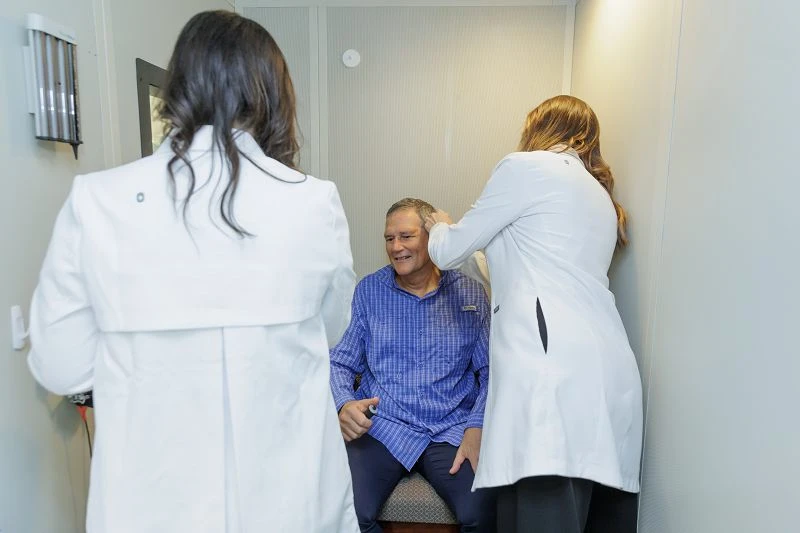
From there, the physical side of things begins, which includes looking at the ear canal and eardrum to check for anything visible that might be affecting how sound is getting through.
Several diagnostic tests are then performed to measure how sound travels through the ear and how clearly speech is understood. These results provide important information that helps guide recommendations for hearing care.
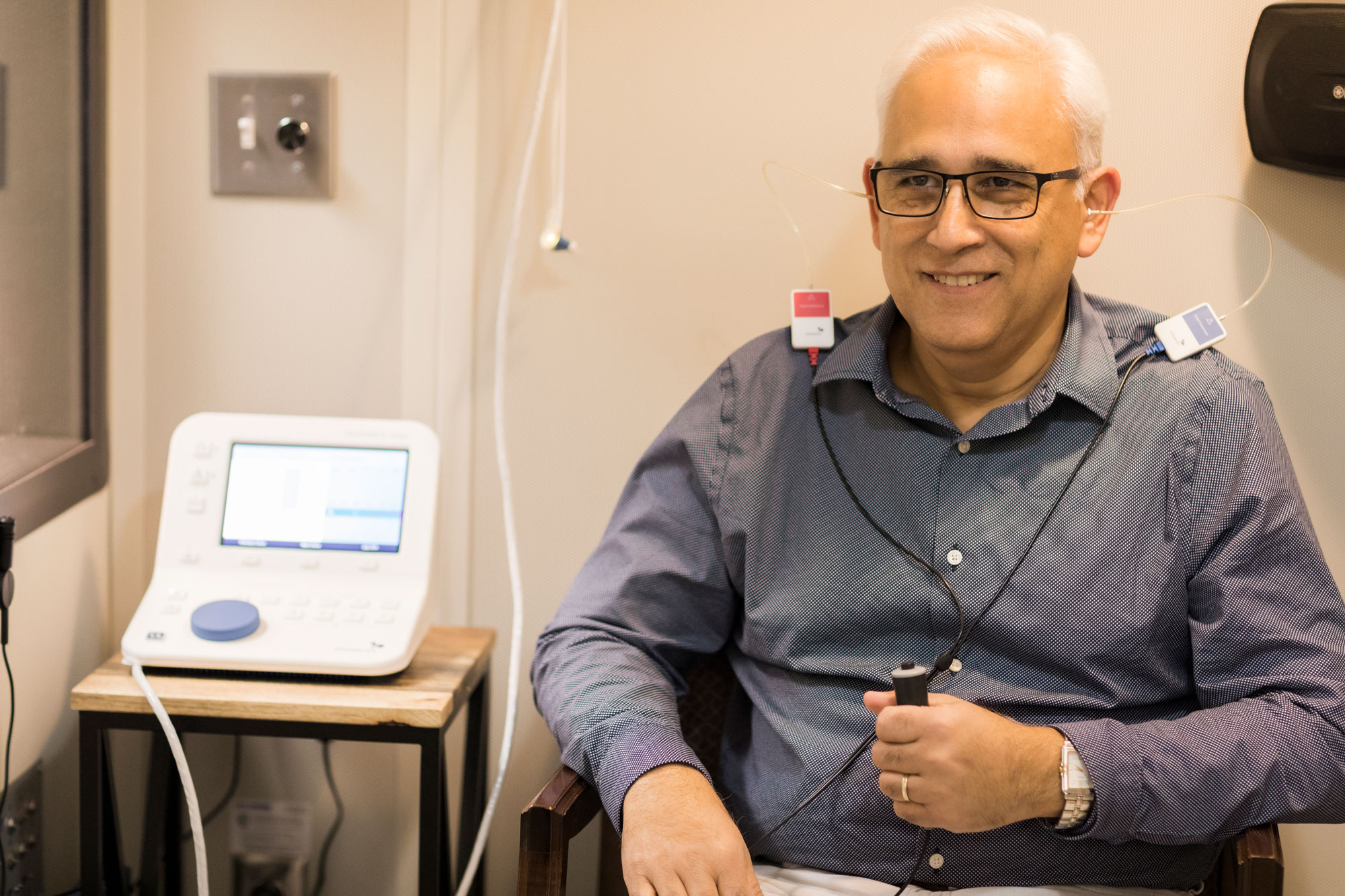
A Comprehensive Assessment may include Several Different Tests, like:
Pure-tone Diagnostic Assessment
You will listen to a series of tones through headphones at different pitches and volumes. This test helps us identify the quietest sounds you can hear and shows which parts of your hearing may be affected.
Speech Testing
This test measures how well you hear and understand spoken words. It helps show how your hearing works during conversations.
Tympanometry Testing
A small amount of air is used to measure how well your eardrum moves. This can help us identify concerns in the middle ear, like fluid or pressure changes.
Acoustic Reflex Tests
We will check how the small muscles in your middle ear respond to sound. The results provide additional information about how your hearing is functioning.
We use these tests to provide a complete picture of your hearing and help determine the most appropriate next steps for care.
Our Hearing Evaluations and Screening Services
Diagnostic Audiologic Evaluation
A diagnostic audiologic evaluation is a detailed assessment of your hearing and ear function. During the evaluation, we measure how well you hear different sounds and speech, and we also examine the ear to check for any physical factors that may affect hearing.
The information from this evaluation influences our recommendations for hearing aids or other solutions that could benefit your daily needs. A full picture of your hearing allows us to match the right technology and settings to how you communicate and interact each day.
Industrial Hearing Screening
Industrial hearing screening is a simple, on-site check that helps us see how your hearing is doing if you spend time in noisy work environments. It can catch early changes in hearing before they become more noticeable, so you have time to take steps to protect your ears.
This type of screening is especially helpful for people who work in construction, manufacturing or other jobs with regular exposure to loud sounds. Regular checks like this can help you maintain your hearing and make work and communication easier.
Evaluation for Hearing Aids
An evaluation for hearing aids starts with reviewing your hearing test results to see which sounds are difficult to hear and how this affects daily life. We will discuss different hearing aid styles and features that fit your lifestyle and listening needs, and you can see, handle and sometimes listen to the devices.
If you choose a custom fit, we’ll start by taking a quick mold of your ears to make sure the devices sit comfortably. Once they’re ready, we’ll get them programmed and calibrate the settings so the sound feels natural for your day-to-day life.
Patient Stories
Hear from our patients about their experience with us
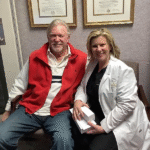
The first time I noticed signs of a hearing loss was back when I was with the Memphis Police Force on the first anti-sniper unit (SWAT) team. Shooting many rounds of guns a week led to ringing in my ears, which it seemed was the start of my hearing loss. The Hearing Center is the very best in the business. They were the most helpful in the profession that I had seen. Since getting my hearing aids, I have no regrets. I enjoy my life much more with my hearing back intact. If you are considering using The Hearing Center, expect to be impressed by the best in the hearing aid business. It’s wonderful to hear well again and I can’t thank them enough.
Bobby B.
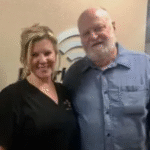
I have visited many different hearing care providers over the years but none compare to the level of care I have received from Dr. LaBorde and the staff at The Hearing Center. I can honestly say they have changed my life by helping me to regain hearing clarity. I highly recommend them.
Robert S.
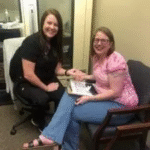
My hearing loss started when I was just 10 years old as a result of multiple ear infections. I was really struggling to hear, and as a result, I had to have a lot of ear construction to save my hearing. I was told that I would never be able to hear certain tones again. For many years, I was living in a world of isolation and I believed that there was no way that I would get all of my hearing back. I had an opinion that hearing aids were for older people. When I first approached The Hearing Center, everyone was very warm and welcoming, and it did not matter how many questions I had. They answered them and were very patient with me. They fitted me with hearing aids and the results have been life-changing. I can hear my children. They can no longer come up behind me and scare me! I feel less tired, I have more energy, and as a result, I am losing weight. Getting help with my hearing from The Hearing Center was the best thing I ever did!
Natasha H.
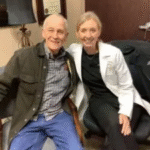
I first noticed my hearing loss when I was having to ask people to repeat themselves a lot. I decided to get my first hearing test and I was very impressed with the service from The Hearing Center. The people were friendly and knowledgeable. Now, I would not be able to cope without my hearing aids. I can now carry a conversation. I can highly recommend seeking help from The Hearing Center if you are struggling with a hearing loss.
Edward C.
