
Surgical Solutions
Cochlear implants are a specialized option considered for specific situations, and getting to the point of receiving one involves a thorough evaluation process before anything else.
That assessment matters because candidacy isn’t a simple determination, and it takes input from more than one type of professional to figure out whether it’s the right direction for someone.
At The Hearing Center, our audiologists are part of that process, working with you through the evaluation, fitting and programming stages to make sure the technology is doing what it’s supposed to do for your specific situation. It’s a different kind of care than a standard hearing aid fitting, and we treat it that way.
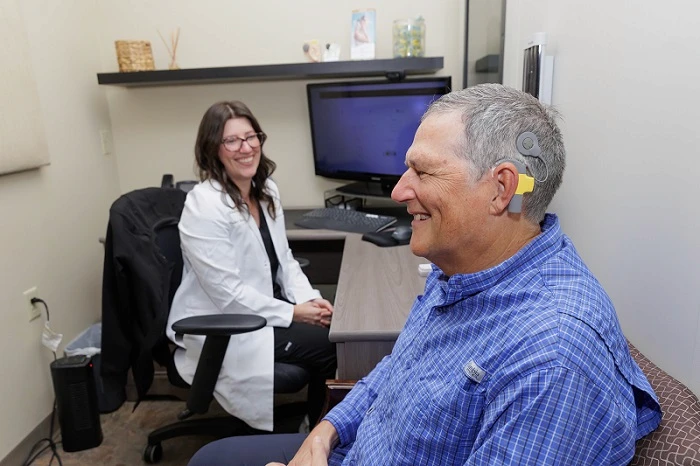
What Are Cochlear Implants?
Cochlear implants work differently than hearing aids at a fundamental level. Rather than amplifying sound, the device bypasses the damaged parts of the ear and sends signals directly to the hearing nerve. That’s what makes them a consideration for specific cases where the ear itself isn’t able to do enough with amplified sound.
The system has two parts: an internal component placed surgically and an external processor worn near the ear. For people who are candidates, the results can be significant. Conversations, phone calls and group settings that had become very difficult to manage become more accessible, and for many people, that changes how they interact in day-to-day situations.
Who Benefits from Cochlear Implants?
Cochlear implant candidacy is determined through a specific set of criteria that goes well beyond simply having hearing loss. Audiometric testing, speech perception scores and medical imaging are all part of the process, and the results have to meet particular thresholds before an implant is even considered.
It’s a multidisciplinary evaluation that involves different medical professionals. If the assessment indicates candidacy, we work with you and the broader care team from there.
What is Cochlear Implant Mapping?
Cochlear implant mapping is the process of programming the device to match your individual hearing needs. During mapping, we adjust the sound signals sent to the electrodes on the implanted array so that you can hear a full range of sounds clearly and comfortably.
The process allows us to fine-tune everything that comes into the implant, from soft sounds to louder noises, ensuring the device responds appropriately in different listening situations.
Follow-up mapping appointments are important to make adjustments as your hearing changes, helping your implant continue to provide the best possible listening experience.
Cochlear Osia® System
The Osia® System is designed for people with bone conduction hearing loss.
Instead of relying on the outer and middle ear, the system uses bone conduction to send sound vibrations directly to the inner ear. This approach allows sound to bypass areas of the ear that may not transmit sound effectively.
Key components of the Osia system:
- Osia OSI300 implant: The implant is placed under the skin during a surgical procedure and works as the internal part of the system. It contains the technology that receives signals from the sound processor and converts them into precise vibrations that travel through the bone to the inner ear.
- Osia 2 sound processor: The sound processor is worn externally and sits comfortably off the ear. It captures sounds from the environment, processes them digitally and sends the signal to the implant, allowing the system to deliver clear and consistent sound through bone conduction.
The Osia® System provides a comprehensive solution for hearing through bone conduction, pairing the stability of the implant with advanced sound processing to support clearer, more consistent hearing.
Cochlear™ Nucleus® System
The Cochlear™ Nucleus® System offers advanced cochlear implant technology for people with severe-to-profound hearing loss. The system provides smart, automatic sound processing that adapts to different listening environments, helping users hear more clearly in both quiet and noisy situations.
- Nucleus® Implants: Designed with the future in mind, these implants allow for compatibility with advancing sound processor technology without requiring additional surgeries. The implant works by sending signals directly to the hearing nerve, bypassing damaged parts of the inner ear.
- Nucleus® 8 Sound Processor: The world’s smallest and lightest behind-the-ear cochlear implant sound processor, featuring automatic environmental adjustments and next-generation Bluetooth connectivity for streaming and device control.
- Kanso® 2 Sound Processor: An off-the-ear option with built-in rechargeable battery, offering direct streaming to compatible Apple® and Android™ devices. This discreet, all-in-one design provides the same advanced hearing technology in a streamlined wearing option.
The Nucleus System’s different processor options give patients the flexibility to choose the style that best fits their lifestyle and wearing preferences.
Advanced Bionics HiRes™ Ultra 3D System
Advanced Bionics provides innovative cochlear implant solutions with groundbreaking features designed to help users effortlessly hear better in any environment. Their technology combines proven reliability with advanced sound processing capabilities.
- HiRes™ Ultra 3D Implant: This MRI-compatible implant features an innovative magnet design that allows for hassle-free MRI scans without surgery or discomfort. Users simply remove the external processor before the scan and replace it afterward, maintaining uninterrupted hearing throughout their treatment.
- Naída CI Sound Processor: Integrating both Phonak and Advanced Bionics technology, this processor automatically evaluates environmental sounds and applies sound cleaning features. It’s the only cochlear implant system capable of establishing wireless networks with devices on the other ear, improving speech clarity in background noise.
Having multiple manufacturer options ensures we can match the right technology to each patient’s specific needs and preferences, providing personalized solutions for better hearing outcomes.
